



Investment

Values take a backseat to performance: Morningstar

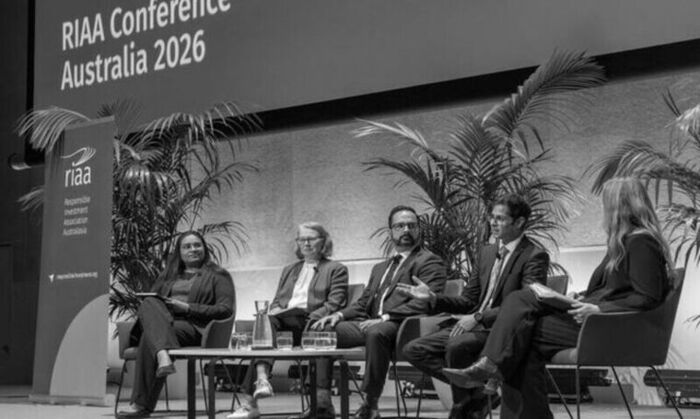
A panel session on product labelling quickly broadened into a candid discussion on weapons exclusions, member demands and the challenge of running sustainable portfolios in a tense geopolitical climate.

On the second day of the RIAA Conference yesterday was a formidable roster of panelists including a leading researcher that rates more than 5000 fund products, a fund manager with more than $1.4 trillion in assets under management and two super funds with a combined retirement pool of $400 billion.

Anchoring the product labelling expertise in the session were RIAA's top policy and certification experts.

Shamir Popat, senior manager research analyst at Morningstar, delivered some home truths, particularly with the defence sector outperforming most indices in the last 12 months.

"You had the guys who were saying, 'We will never buy weapons'. What's happened since then? Ukraine war with Russia. What's happening in this year? Managers are walking back on their values because of the way the world has changed."

It's like the world of sustainable investing has momentarily ground to a halt.

"Values are taking a backseat to performance. It's that simple. We're at a point in the market cycle where momentum in some of these themes is so high and the market is so narrow that everything else is taking a backseat."

Staying on theme, Bhanu Singh, chief executive officer in Australia for Dimensional Fund Advisors, said that historic data is yet to borne out a strong correlation between ESG metrics - and associated labelling - with returns.

"Around the late 2000s, we launched a series of commingled strategies around the globe for investors.

"So far, we haven't seen any link between ESG metrics, such as emissions because that's where the data is really strong, and any additional information about returns in your portfolio.

"The premise that you can buy companies or overweight companies that have lower emissions, should lead to outperformance - that it gives you more information than what you already know from their prices and cash flows - we don't see any evidence to suggest that," he said.

It's also hard to see the impact of exclusions from a return's perspective.

"If you look at a trading market, and you go back to the history of the ASX300 and start excluding all the energy stocks - and look at the performance of the ASX300 with and without energy stocks - it's almost identical over that entire period," he said.

"Sectors go in and out of favour, and when you take on something like a sustainability overlay, you will end up with bets against or for certain sectors."

New label: Responsible ownership

Taking it a step above fund labelling, Liza McDonald, head of responsible investment at $235 billion fund Aware Super, called their whole-of-fund approach as 'responsible ownership'.

"We will be the owners of the market, but what we want to do is own those assets responsibly and that comes into play around ESG integration and stewardship, and they're the main ways in which we manage our portfolios," she said.

"We do acknowledge that a number of our members do want to invest their money in line with their value so we do offer what we term 'socially conscious' options."

These options are predominantly based on a screening approach.

"There's fossil fuel screens, ethical screens and then there are screens around conventions and controversies," she said.

With the conflict in the Middle East and the Russian invasion of Ukraine in 2022 really changing the game for the defence sector, Aware Super has listened to its members regarding investing in weapons.

"When we looked at introducing a weapons exclusion, we found that it would introduce a huge tracking error into those options, but that's what our members wanted, so we've still got to balance that return and we've got to think of a way to do it," McDonald said.

"We offer these products because members want them. It's our job to make sure we're meeting that. We need to make sure we're offering a portfolio that speaks to the 'Your Future, Your Super' test."

UniSuper on the 'sensible middle' approach

Unisuper, which from July 1 updates its negative screens on companies with revenues associated with conventional weapons under its sustainable options, was also on the panel with Jodie Barns, manager of ESG investments, acknowledging the dichotomy of returns versus values in their membership.

She said three in four members would like to invest sustainably but only if they're not worse off than a typical member in a mainstream option.

"So, we know that sustainable investing and giving members this choice is important, but making money is important, too," Barnes said.

"My greatest worry about anything that restricts our investable universe sufficiently is that we are no longer able to provide choice and provide a retirement product that is sensible for our members."

Going back to the core topic of product labelling, all the panelists agreed that hard-and-fast rules don't work.

"I very much think that a principles-based approach and a nuance-based approach, rather than a tick-boxing exercise is the right way. If someone's angry at you somewhere, you're probably in the sensible middle."

On the upside, Morningstar's Popat said that what the geopolitical shocks had done for the sector is eliminate the pseudo-sustainable products and strategies in the market.

"One of the biggest things we've seen is that the greenwashers get taken out. The funds that were launched too quickly in 2018 [to ride the sustainability] trend, trying to capture flows, their products didn't reach viability and we've seen the record levels of closures in the last year."

At the very least, product labelling should continue doing that - get rid of the greenwashing.

Shalini Samuel, head of certification at RIAA, said that RIAA runs a year-long certification program that's anchored in the responsible investment standard which ensures what is said on the tin then translates across into portfolio construction and the interim disclosures.

"We absolutely do want labelling to ensure that things do not mislead. That's the core objective of labelling," she said.

FS Sustainability is a media partner of the 2026 RIAA Conference held in Melbourne May 27-28.

Read more: MorningstarAware SuperUnisuperBhanu SinghDimensional Fund AdvisorsJodie BarnsLiza McDonaldShalini SamuelShamir Popat