



Podcast: Super El Niño: Winners and losersBY THE GREENER WAY | TUESDAY, 15 SEP 2026 8:34AM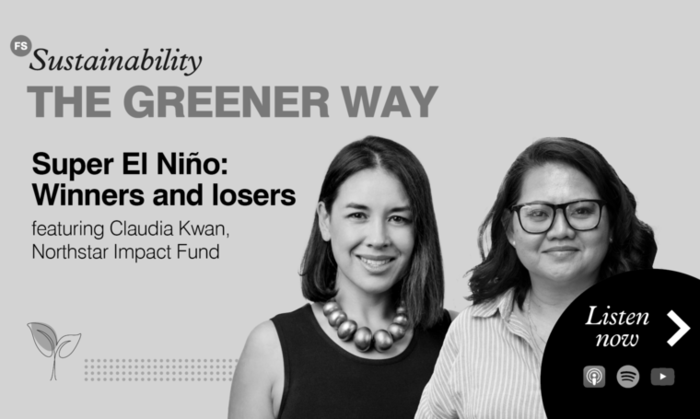
🌡️ Super El Niño, AI and water scarcity: The investment trends that could reshape the ASX ❓ Question: How could a potential Super El Niño, rising temperatures and the rapid expansion of AI data centres create new investment opportunities and risks for investors over the coming decade? ✅ Answer: According to Claudia Kwan, managing partner and portfolio manager at North Star, investors are entering an unprecedented period where climate change, extreme weather patterns and AI-driven infrastructure demand are colliding. A potential Super El Niño could affect water availability, energy demand, supply chains, commodity prices and capital allocation decisions across the economy. Kwan believes investors who understand these interconnected trends will be better positioned to identify the next generation of winners, while those relying solely on traditional investment metrics may miss significant opportunities. 🌟 Investors are facing a climate event without historical precedent While Super El Niño events have occurred before, Kwan notes that they have never occurred alongside today's backdrop of rising global temperatures and accelerating climate change. This makes forecasting more difficult and increases uncertainty for investors. 🌟 AI data centres are becoming a major economic force The surge in AI adoption is driving unprecedented demand for data centres, placing increasing pressure on energy systems, infrastructure and water resources. This is creating new investment themes that extend well beyond the technology sector. 🌟 Water may become one of the most valuable investment themes Kwan argues that water remains overlooked compared with energy and electrification. Changing rainfall patterns, droughts and flooding could create both risks and opportunities across industries, making water-related infrastructure and solutions increasingly important. 🌟 Supply chain disruptions are becoming more frequent Extreme weather events such as cyclones are already affecting manufacturing and logistics networks. Investors can no longer view climate disruptions as isolated events because their impacts are spreading across global supply chains. 🌟 Climate adaptation is creating new commercial opportunities As businesses adapt to changing environmental conditions, demand is increasing for technologies and services that improve efficiency, resilience and resource management. Companies providing these solutions may benefit from long-term structural growth. 🌟 Rising commodity prices are helping circular economy businesses Higher resource prices are improving the economics of recycling, reprocessing and waste recovery. Activities that were previously uneconomic are becoming commercially viable as demand for critical materials increases. 🌟 Investors may need to rethink how they value growth companies Traditional measures such as earnings, free cash flow and balance sheet strength remain important, but Kwan believes investors should also evaluate market size, adoption potential and unit economics when analysing emerging industries. 🌟 The next decade could create entirely new market leaders Kwan expects many future ASX success stories to come from sectors linked to electrification, climate adaptation, digital infrastructure and resource efficiency. She believes the composition of the ASX 200 could look very different by 2035. 🚩 Funding the transition remains a major challenge The enormous investment required for energy infrastructure, data centres and climate adaptation will require substantial capital. Investors need to pay close attention to funding sources and the cost of capital. 🚩 Volatility is likely to increase More extreme weather events and shifting climate patterns may result in greater uncertainty across financial markets, creating both opportunities and downside risks. 🚩 Climate risks now affect almost every sector From supply chains and insurance costs to resource availability and consumer spending, climate-related impacts are becoming embedded across the broader economy rather than affecting individual industries. ⚠️ Black swan events may become more common Kwan warns that investors should prepare for unexpected climate-related and capital-market shocks. Events previously considered rare could occur more frequently in a world shaped by climate change and rapid technological transformation. ⚠️ Investors who ignore emerging data could fall behind As climate, weather and infrastructure data become increasingly important drivers of performance, investors who fail to monitor these developments risk mispricing opportunities and threats. 💡 Why it matters: Climate change is no longer simply an environmental issue. It is becoming a powerful investment driver that influences energy demand, water resources, supply chains, capital flows and market valuations. Kwan's research suggests that understanding the interaction between Super El Niño, AI infrastructure growth and climate adaptation could help investors identify future winners while better managing long-term portfolio risks. 🎙️ Sources: Claudia Kwan, managing partner and portfolio manager, North Star Michelle Baltazar, host, The Greener Way ⏱️ Timestamps: 00:00 - How Super El Niño could reshape investment markets 00:45 - Introducing North Star and impact investing 01:44 - What defines a Super El Niño? 02:34 - Why investors should pay attention now 04:04 - Climate adaptation and investment opportunities 05:05 - Why water is an overlooked investment theme 05:45 - AI infrastructure and supply chain impacts 06:46 - Commodity prices and circular economy opportunities 07:26 - Rethinking traditional investment metrics 08:55 - Evaluating growth opportunities in emerging industries 09:52 - M&A activity and industry consolidation 11:40 - Claudia's prediction for the ASX in 2035 12:04 - Funding challenges and key investment risks 13:37 - Black swan risks and increasing volatility 14:55 - Final investor takeaways 🌿 We record on Gadigal Land and pay our respects to the traditional custodians of Country and elders past and present. |


Editor's Choice
Palisade expands renewables platform with double acquisitions
Mirova sets up shop in Australia
Podcast: Super El Niño: Winners and losers
|Australian Ethical launches ethical fund for wholesale investors
Videos

Whitepapers

Modern slavery in the geopolitical crossfire

What ACCR v Santos means for your climate disclosures

Materiality is not a single judgment: It is a governance system

Roundtable reflections: Is ESG dead?
Expert Feed

Australia's social media age ban: A digital turning point for society and investment markets

How economics and energy security are driving the next phase of the energy transition

Sustainability in 2025: Building resilience and navigating risks

Balancing Investor expectations with entrepreneurial growth